

Polyester fabric is one of the most widely used synthetic fibres today, thanks to its high durability, excellent shape retention and ease of care. When you step into the world of premium bedding from Changmi, you will find polyester subtly incorporated into many product lines, from linings to blended fabrics, optimising comfort whilst maintaining a minimalist and tidy bedroom space.
What is polyester fabric? Origin and composition
Polyester fabric is a type of synthetic fibre that is widely used in the modern textile industry. This material is notable for its high durability, resistance to creasing, excellent shape retention, resistance to shrinkage, quick-drying properties and ease of care. Thanks to these characteristics, polyester is widely used in the manufacture of fashion clothing, sportswear and many home furnishings such as bed linen, curtains and sofas.
Polyester was invented by British chemists in the 1940s and quickly became a popular textile material worldwide. The main component of this fabric is polyethylene terephthalate (PET) resin, derived from petroleum and coal. During production, the PET resin is melted, drawn into strong polymer fibres and then woven into the finished fabric.
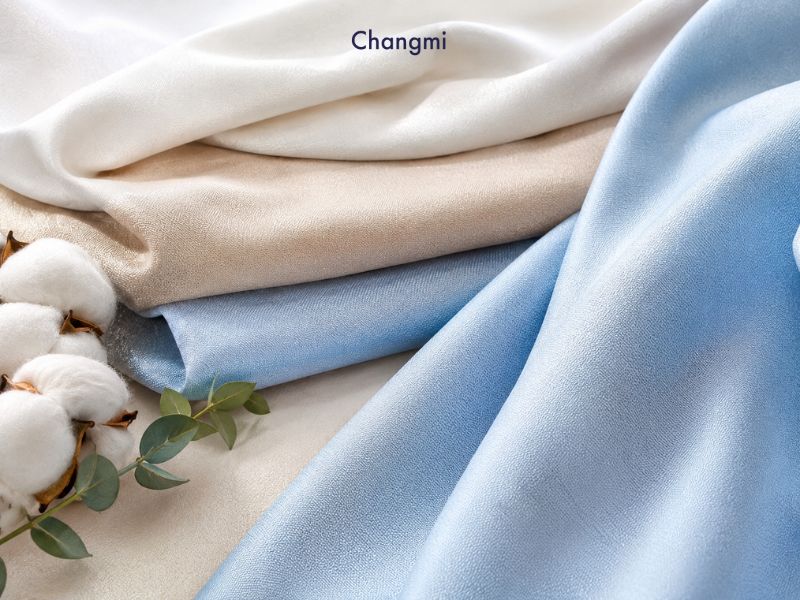
The advantages and disadvantages of using polyester fabric
Before choosing polyester fabric, users should familiarise themselves with the advantages and disadvantages of this material so that they can easily select a product that suits their needs.
What are the advantages of polyester fabric?
Polyester fabric is popular due to its high durability, resistance to creasing, quick-drying properties and ease of care, making it increasingly common in fashion and interior design.
- High durability, minimal shrinkage: Thanks to its strong fibre structure, polyester fabric is resistant to tearing, retains its shape well and shows virtually no shrinkage after washing, ensuring the product keeps its shape for a long time.
- Crease-resistant and easy to care for: Polyester is quite crease-resistant, so after washing and drying, the fabric remains smooth, saving you time when looking after your bedding.
- Dries quickly, ideal for humid weather: As polyester fabric absorbs very little moisture, it dries much faster after washing than some natural fabrics, making it ideal for humid tropical climates and small apartments.
- Affordable and accessible: Compared to entirely natural materials, polyester fabric is generally more affordable, making it accessible to customers who wish to purchase multiple sets of bed linen for their home or serviced apartment.
- Versatile applications and fabric blends: Polyester blends well with cotton, viscose or lyocell to create new fabric ranges such as PolyCotton, striking a balance between durability and breathability, making it suitable for a wide range of bedroom styles.
>> Xem thêm: So sánh vải Polyester và Cotton: Loại nào tốt hơn?
What are the drawbacks of polyester fabric?
Alongside its notable advantages, polyester fabric does have a few drawbacks that you should consider before choosing it for your nightly sleep.
- Breathability and moisture-wicking properties are not particularly high: Pure polyester fabric is less breathable than cotton or linen, and can easily feel hot and stuffy, as well as slightly sticky, when the body sweats heavily.
- The feel is not natural: Some types of cheap polyester have a slightly stiff or shiny surface, and are not as soft and comfortable as natural fabrics.
- Environmental impact: As polyester is a synthetic fibre derived from petrochemicals, it does not biodegrade as quickly as natural fabrics; this should be taken into account when using it over the long term.
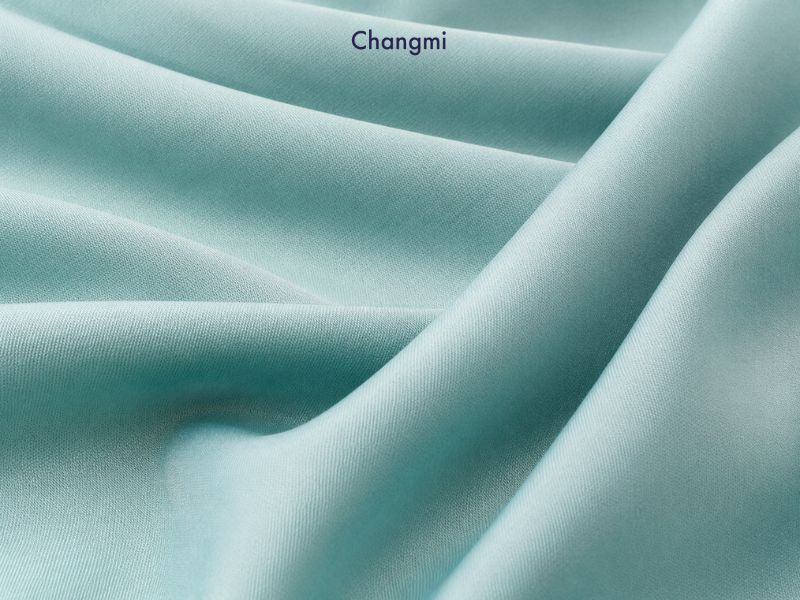
Common types of polyester fabric currently in use
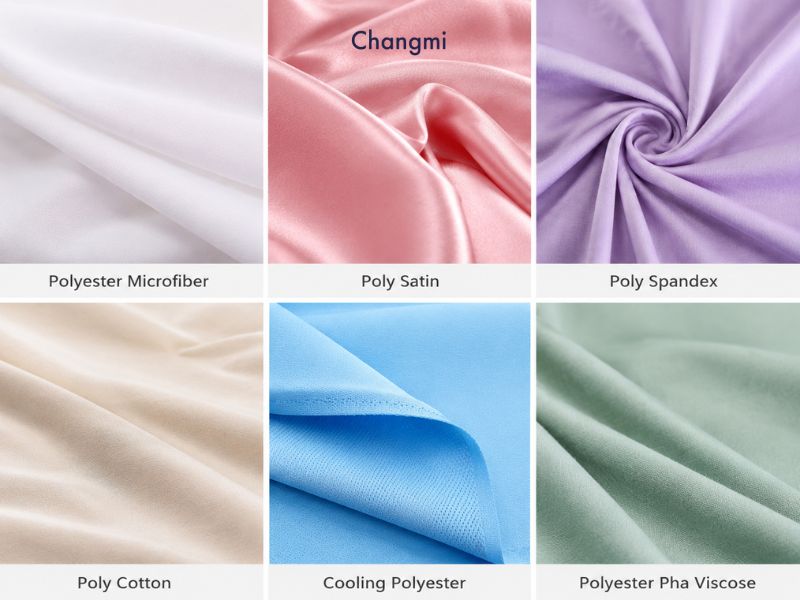
In the world of textiles, polyester is not only found in its pure form but is also transformed into a variety of different fabrics. Each type offers a unique feel against the skin and a distinct wearing experience.
- Polyester Microfibre Fabric: This is an ultra-fine polyester fibre with a diameter much smaller than that of a human hair, making the fabric soft, lightweight and form-fitting. This material is commonly used in pillow fillings, synthetic down duvets and certain bedding products.
- Poly Satin Fabric: Poly Satin is a type of satin fabric woven from polyester fibres, featuring a smooth, glossy surface on one side and a more matte finish on the other. This fabric is ideal for products requiring a luxurious appearance whilst maintaining good durability.
- Vải Poly Spandex: Sự kết hợp giữa Polyester và chất liệu Spandex tạo nên loại vải có độ co giãn tốt, giữ form ôm sát cơ thể. Vải thường thấy ở drap bọc nệm hoặc một số chi tiết ôm của vỏ gối.
- Vải Poly Cotton: Poly Cotton là sự pha trộn giữa Cotton và Polyester nhằm tận dụng ưu điểm của cả hai chất liệu. Vải bền, ít nhăn hơn chất liệu vải Cotton thuần nhưng vẫn thoáng khí và dễ chịu hơn 100% Polyester.
- Cooling Polyester: Some modern polyester fabrics are designed with a special fibre structure or surface treatment to provide a cooler feel and better heat dissipation than standard polyester, making them ideal for bedding ranges designed for a cool sleep.
- Vải Polyester pha Viscose: Sự kết hợp giữa Polyester bền chắc và vải viscose có nguồn gốc Cellulose giúp vải mềm mịn hơn, tăng khả năng thấm hút và hạn chế cảm giác bí nóng, đồng thời vẫn giữ được độ bền và khả năng chống nhăn tốt.
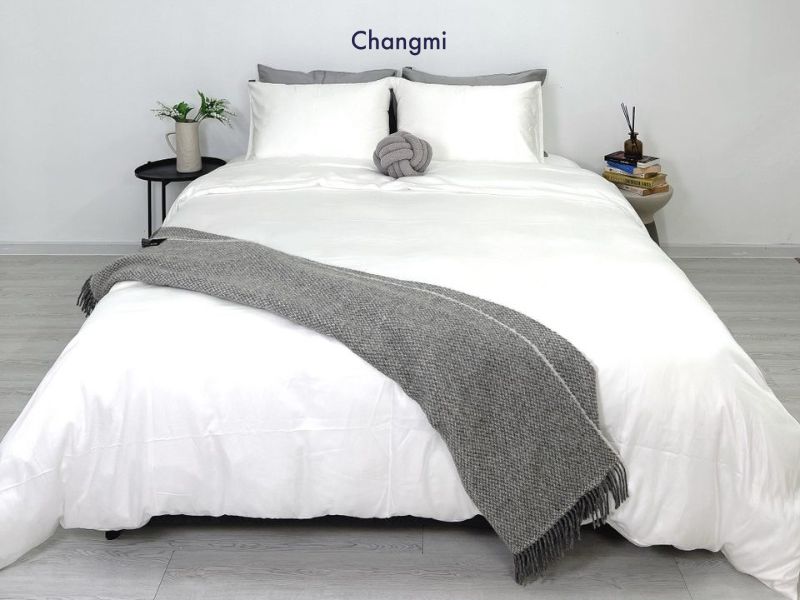
The use of polyester fabric in duvets, bed sheets and pillows
Thanks to its durability, lightness and ease of care, polyester has become a reliable choice for those parts that are rarely seen but have a significant impact on how you sleep each night.
- Lining and inner layers in hotel bedding: Polyester and microfibre are commonly used as linings or inner fillings in duvets and pillows, providing a moderate level of softness and loft whilst retaining their shape over time.
- Pha cùng Cotton cho ga giường chuẩn khách sạn: Tại Changmi, Polyester được phối cùng Cotton trong một số dòng như Cotton Sateen (chăn ga cotton sateen) hoặc PolyCotton, giúp bề mặt ga vẫn mềm mịn nhưng vải bền hơn, ít nhăn và nhanh khô hơn sau khi giặt.
- Supports premium materials such as high-thread-count cotton: In Changmi Bedding’s T300 or T400 cotton bedding sets, a small percentage of polyester may be included to enhance durability, reduce creasing and help the product retain its shape over the long term.
- Kết hợp với Lyocell hoặc Tencel: Khi kết hợp với các chất liệu như Lyocell or vải Tencel, Polyester có thể cân bằng tốt giữa độ thoáng mát, khả năng thấm hút và độ bền, từ đó tạo nên các bộ chăn ga nhẹ, bền và phù hợp với khí hậu nóng ẩm.
- Gentle warmth in winter: Thanks to its excellent heat retention properties, polyester is often used in thin duvets or duvet fillings, helping the body feel warmer without the need for overly heavy duvets.
How to care for and maintain polyester fabric to keep it looking good and lasting longer
To ensure that your polyester bedding sets—or those containing polyester—retain their durability and smooth, attractive finish, you simply need to follow a few simple care tips when washing and using them.
- Wash at a moderate temperature: Polyester fabrics should be washed in cool or lukewarm water; avoid using water that is too hot to prevent the fibres from warping and to keep the surface smooth and flat.
- Limit the use of strong bleaching agents: You should use a mild detergent and avoid strong bleaching agents to prevent the fabric from becoming stiff or losing its lustre, helping your bed linen retain its delicate colour tones.
- Do not tumble dry at too high a temperature: When using a tumble dryer, select a low-heat setting or the air-dry setting to prevent the polyester fabric from shrinking or becoming stiff, whilst helping to extend the life of the fibres.
- Air dry in a well-ventilated area, away from direct sunlight: For polyester or polycotton bed linen, you should air dry it in a place with a gentle breeze and avoid prolonged exposure to direct sunlight to ensure the colours remain vibrant and do not fade due to UV rays.
- Fold neatly and store in a dry place: Once completely dry, fold neatly and store in a dry, well-ventilated cupboard to prevent mould and mildew. This also helps to minimise creasing and ensures the fabric is always ready when you want to change your bed linen.
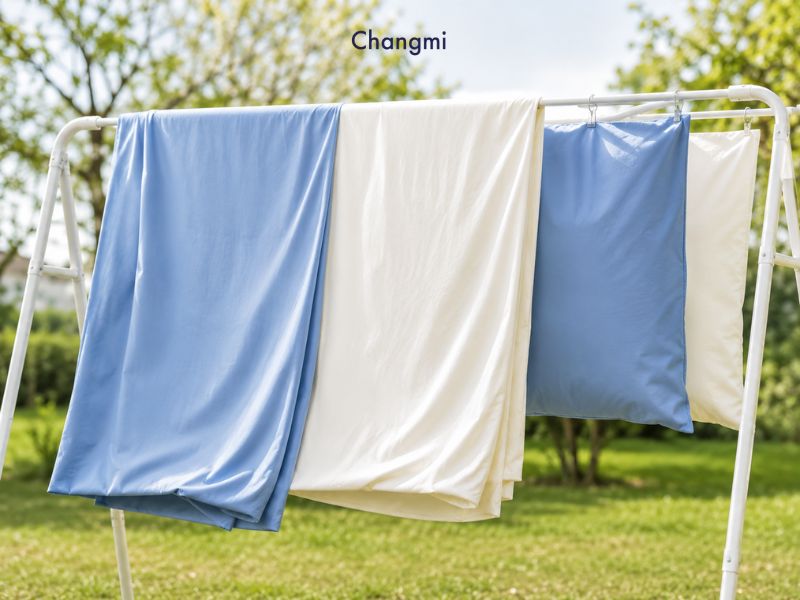
Changmi Bedding specialises in supplying bedding made from high-quality polyester fabric in Ho Chi Minh City
At Changmi, polyester is always carefully considered in every design to complement the main fabric whilst ensuring a restful night’s sleep. Our aim is to provide durable and beautiful bedding sets that harmonise with our customers’ minimalist and sophisticated living spaces.
- Selective use of polyester: Polyester is used in appropriate proportions to complement the main fabrics, such as cotton, lyocell or viscose, helping to increase durability, maintain the fabric’s shape and reduce creasing, whilst retaining a soft, comfortable feel against the skin.
- A minimalist, clean living space: The bedding designs are tailored for minimalist, tidy sleeping spaces that are easy to coordinate with other furnishings. This helps keep the bedroom tidy and clean whilst still creating a warm and inviting atmosphere.
- Rigorous production and quality control processes: Changmi pays close attention to every step, from the selection of fabrics to every stitch, ensuring that every product that reaches the customer meets their expectations for comfort, aesthetic appeal and exquisite craftsmanship in every detail.
Frequently Asked Questions about Polyester Fabric
1. Is polyester fabric hot?
Polyester fabric can feel hot when used in its 100% polyester form, as the material retains heat quite well. However, when blended with cotton or Lyocell, the fabric becomes more breathable and comfortable to wear.
>> Xem thêm: Vải Polyester có mát không?
2. Is polyester fabric harmful?
Polyester fabric is generally harmless and quite safe for use in bedding if manufactured to the correct standards. You should opt for products from reputable brands to ensure they are safe for your skin and respiratory system.
3. Is polyester fabric any good?
Polyester fabric is a good choice thanks to its high durability, resistance to creasing, ability to retain its shape, and reasonable price. This fabric is suitable for everyday use or for items that require frequent washing.
4. Is polyester fabric stretchy?
Pure polyester fabric has moderate stretch due to its fairly stiff fibres and low elasticity. To improve the fit and elasticity of bed linen, spandex is often blended in to create a polyester-spandex fabric.
5. Does polyester fabric crease?
Polyester fabric creases slightly but retains a smooth, neat finish after washing and drying without requiring much ironing.
Understanding what polyester fabric is will help you choose a set of bedding that suits your needs. When combined with natural fibres, polyester is both durable and practical, whilst helping to make your bedroom look tidier and more elegant. If you’d like to find out more about bedding ranges made from polyester or blended fabrics, you can browse the products from Changmi Bedding for advice tailored to your needs.